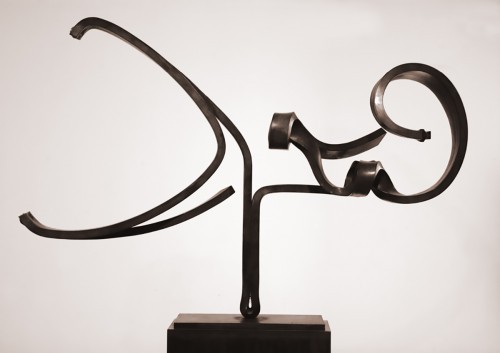
MOMENTOS II REFLECTIONS OF EL GUERNICA
2008
107 x 155 x 53 cm
Forged iron

MOMENTOS. REFLECTIONS OF EL GUERNICA
Pablo Picasso said: “I think above all about Julio González, who was so aware of the great Spanish tradition of cast iron, and
yet still so receptive to innovations of space”; this is how Picasso put into words his arrival at Barcelona, and one of the most talented
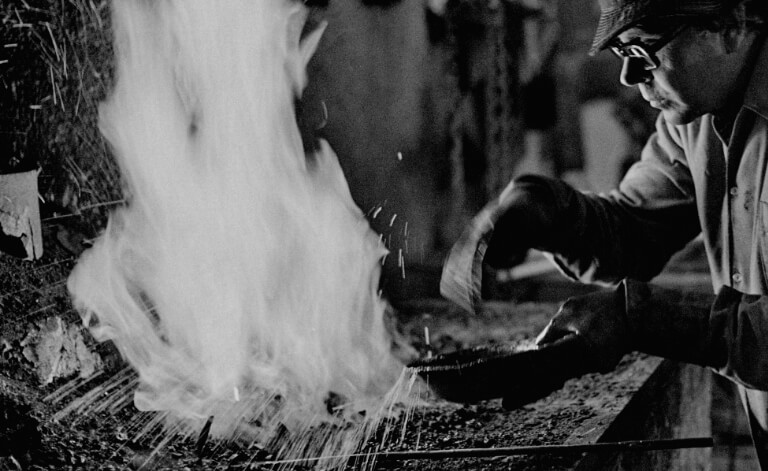
craftsmen in fire and iron, Julio González. In 1928, in the workshop González had in Paris, Picasso forged his most important sculptures,
while González delved into new possibilities that his friend had discovered while experimenting with total freedom. To transform a bar of
iron into sinuous models that make suggestions with their transparent meandering volumes, it is necessary to slowly familiarize oneself
with iron as well as the tools. All craftsmen and sculptors establish an intimate relationship with their work tools, and indeed they become
an extension of their hands. The weight, shape and balance of the mallet, as well as how it weighs in the hand, are as valuable as the
gestures that create the shape. But Chirino also had other, more virtual tools. Like all good artists, he needed to have, or rather, needed
to create, a grounding, and Picasso and his work El Guernica didn’t go unnoticed by him. These two sculptures, emerging from those
sketches going back to his informalist stage, that Chirino adhered to when he was part of El Paso, display the admiration he felt towards
the artistic representation of a historic event that Picasso was able to turn into his most emblematic work. “It was all so new, the
sculptures came out of my first forge in Cuenca. In Spain a kind of madness had already set in, or at least that’s how the
establishment saw it, as people from the Regime looked on at the artists with a certain trepidation, as opposed to another social
sector, who in their attempts to keep up with the times, actually encouraged us...
I often wonder how, in such a dark and dreary time, it was possible to put together such rabid contemporary art exhibitions,
how this weird situation could actually be possible at a time where there were hardly any critics and where Picasso was
considered wicked. But that was my generation, full of youth, setting up exhibitions in the midst of such bewilderment. So did
the structural barriers soften or did our enthusiasm just make us tough? Whenever I ask myself this question I come to the
conclusion that we were part of very special set of circumstances and that contemporary art, that was enjoying such splendid
times in Paris and had been aborbed by America, really needed to come inside Spain and set off this eagerly awaited cultural
revolution that was so characteristic of the end of the 20th century”.