- ESPAÑOL
- ENGLISH
- Foundation
- Collection
- Visits
- News
- Education
- Foundation's Friends
- ESPAÑOL
- ENGLISH
- Foundation
- Collection
- Visits
- News
- Education
- Foundation's Friends
Francisco Jarauta. The world as a labyrinth
19/01/2023 20:00 - 22:00
Francisco Jarauta approachs, in this conference, the iconography of the labyrinth and its echoes through history and art, extending Ariadne's famous thread to unravel its structures and processes.
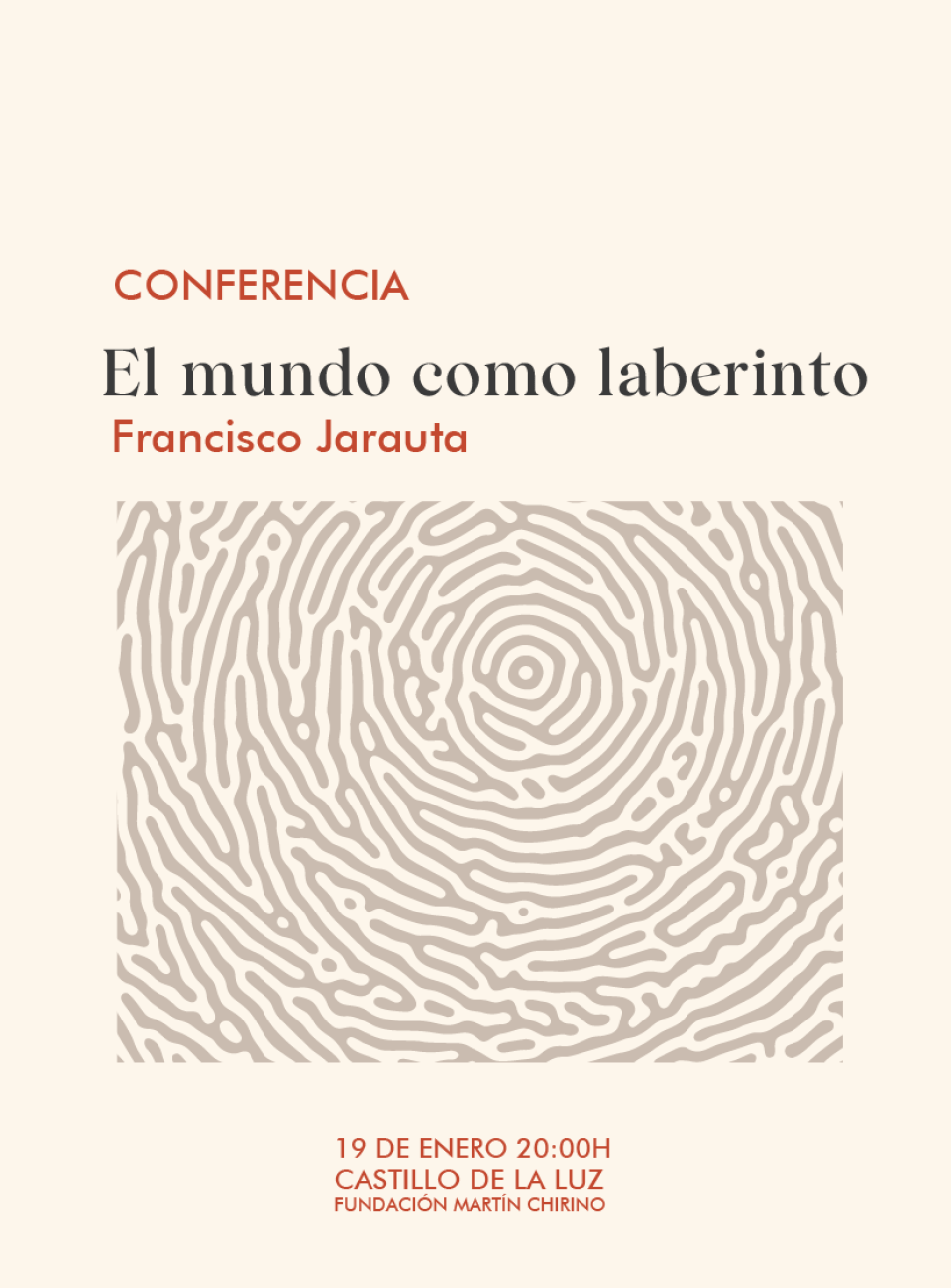

From the classical labyrinth, that of Knossos, to the mannerist forms that at the time depict the wandering of the baroque man, various expressions travel that in the history of iconography show us the complex repertoire of interpretations of the labyrinth. Borges links the permanence of the symbol with the loss of transparency or with what he calls "the opacity of the world", the difficulty to explain or understand the law of events, the story of fate. However, another history, that of the various literatures, allows us to think about how the writing and reading have been trying to weave that tapestry of the world in which they are built maps and images of what is hidden in the shadows. Both write and read constitute that Ariadne's thread that not only allows us to free ourselves from the labyrinth, but also also to continue weaving and deciphering the tapestry of forms and signs that today extends in the space of our culture. It is curious to observe how the modern world has restored the truth and meaning of labyrinth associating it to the new fields of knowledge; wonderful to enter the labyrinths of living beings, of small particles, of the nervous system... where everything it is built according to logical networks that articulate the parts and distances, drawing true labyrinths as a real form of biological structures. And equally, if we refer to the virtual world of communication, to networks as well labyrinthine paths that cover our world like a hyperstructure, making possible the journey of the knowledge If before the job of the reader was to go through the tapestry that the liberated Ariadne was weaving along time, is now a new reader, navigator par excellence of other universes, the one that traces the routes of the possible worlds from the processes of interaction and exchange of knowledge and discourses.


You may be interested in: