- ESPAÑOL
- ENGLISH
- Foundation
- Collection
- Visits
- News
- Education
- Foundation's Friends
- ESPAÑOL
- ENGLISH
- Foundation
- Collection
- Visits
- News
- Education
- Foundation's Friends
Drake, the wound of the Dragon
18/10/2022 - 01/11/2022 10:00 - 19:00
'Drake: the wound of the Dragon' is the name of the first exhibition held in the Canary Islands on the figure of Sir Francis Drake and the attack on the Real de Las Palmas in 1595. This exhibition, promoted by the General Directorate of Cultural Heritage, with the collaboration of the Martín Chirino Foundation, combines information on interpretive panels on this historical milestone with a military expedition camp from the end of the 16th century.
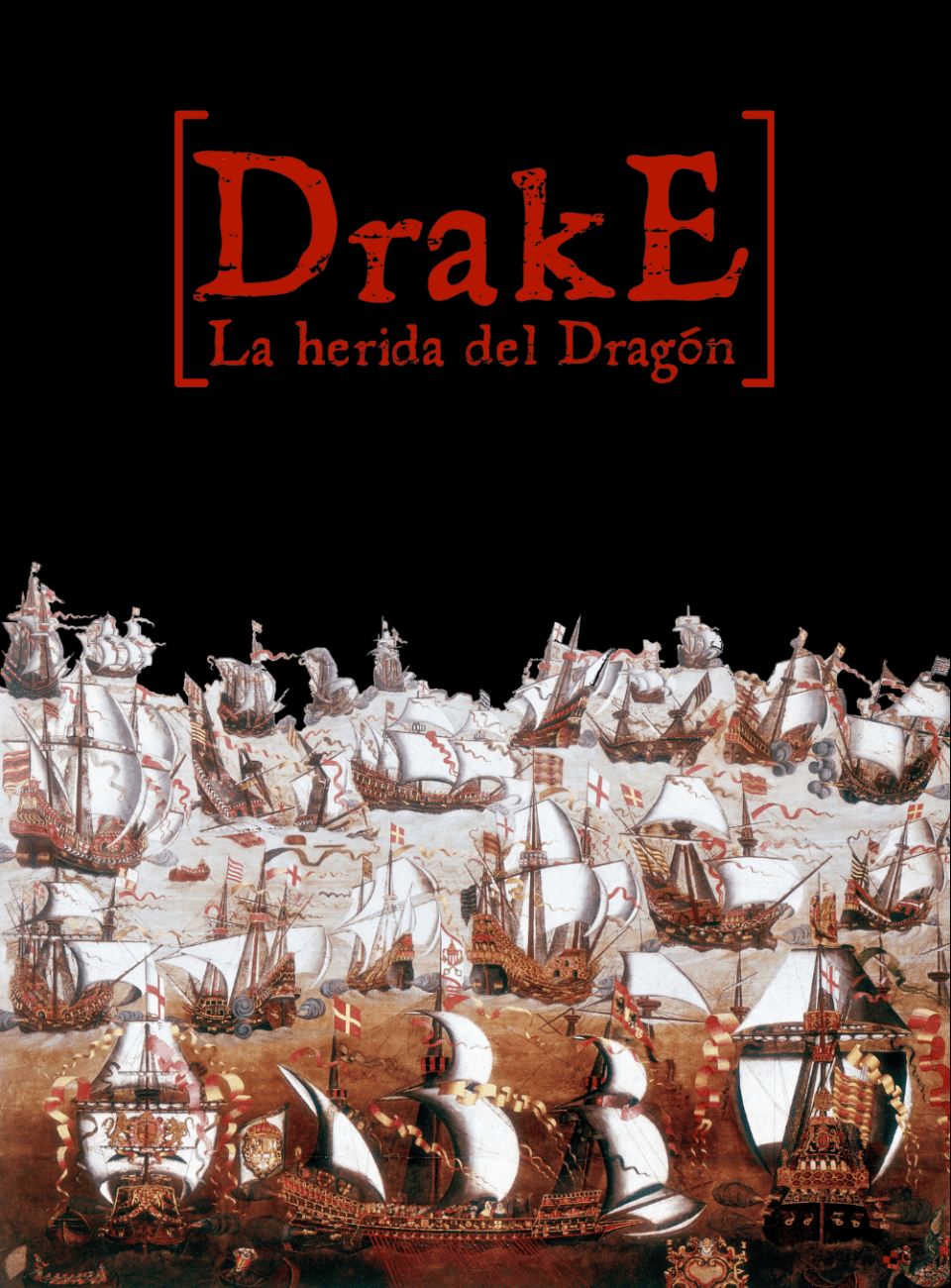

'Drake: the wound of the Dragon' is the name of the first exhibition held in the Canary Islands on the figure of Sir Francis Drake and the attack on the Real de Las Palmas in 1595. This exhibition, promoted by the General Directorate of Cultural Heritage, with the collaboration of the Martín Chirino Foundation, combines information on interpretive panels on this historical milestone with a military expedition camp from the end of the 16th century.
Coinciding with the anniversary of the victory of Las Palmas de Gran Canaria over the English fleet, the exhibition planned by Patrimonia Consulting aims to recover and disseminate, through an immersive experience, the history of this attack by the English corsair Sir Francis Drake, who unsuccessfully tried to take the city in October 1595.
The exhibition is conceived as a "living museum" with historical recreations and punctual dramatizations of the corsair attacks of this time to place the public in the context of the European rivalries of the 16th century. In fact, the person who visits the military command pavilions and the soldiers' booths will be able to interact and manipulate the reproductions that are exhibited from the Elizabethan era.
The opening ceremony will be next Tuesday, October 18, at 9:30 am with the assistance of the General Director of Cultural Heritage, Nona Perera; the director of the Foundation, Jesús Castaño; as well as the person in charge of the exhibition contents, Artemi Alejandro Medina
However, this proposal not only includes the assembly of the exhibition and the dramatized screenings, but it will also have complementary activities that will be developed throughout the year, such as an Underwater Archeology workshop where a planimetry will be drawn up under the sea to discover the tools and characteristics of this discipline.
A decisive milestone
Sir Francis Drake (1540-1596) was the most renowned explorer of the Elizabethan era who, after his successful circumnavigation of the globe in 1580, amassed an immense fortune. For the English nation he was a famous hero, but for the rest of the nations an infamous navigator.
During the Anglo-Spanish War, Drake proposed to Queen Elizabeth to assemble a fleet to attack Panama, but before reaching America the English corsair decides to take the island of Gran Canaria despite the fact that at first, the other command, John Hawkins refused. However, the lack of food and drinking water caused a change in this decision.
After the sighting of the English sails, the Spanish authorities of the island, with Governor Alonso de Alvarado at the head, were barely able to gather 1,500 men for the defense, most of them civilians with no combat experience or military training. However, an hour and a half of fighting later, the English withdrew having lost some forty men and four barges, while the islanders suffered hardly any casualties.
The English fleet had not been able to solve its important supply problems, so they continued to sail close to the coast in search of a favorable area to supply themselves. In turn, the Spanish authorities ordered several patrols to follow the enemy fleet along the coastal roads and upon reaching the unpopulated bay of Arguineguín, the English sent a boat to the coast but were surprised by a Spanish patrol that attacked them, killing eight of them and taking two prisoners.
The prisoners were immediately interrogated, thus revealing the English plan, which would be decisive for the war, as Governor Alvarado immediately sent notice to the Indies and to the court in Spain to attack the English fleet in America.


You may be interested in: